What Stands Between Compassion and Action?
This morning, while talking to my child about the increasing number of natural disasters happening across the world, I walked away with more questions than answers.
In many ways, I felt like I was standing in my own court, being questioned.
The questions were uncomfortable.
Do I have selective compassion?
If yes, what prevents me from expanding it?
If I feel pain when I see suffering, why is my response so different when the person affected is my child, a family member, a stranger, or someone living thousands of miles away?
As I sat with these questions, my first instinct was to look for an explanation.
Perhaps compassion is directly proportional to our capacity for sacrifice.
The more willing we are to let go of our comfort, preferences, and self-interest, the greater our capacity for compassion.
At first, the explanation seemed convincing.
But the more I reflected, the less certain I became.
Life kept presenting examples that challenged my conclusion.
Parents often allow their children to experience discomfort because they believe it serves a larger purpose. Spouses deeply care for one another and yet struggle to let go of their own preferences. Organisations working towards the same cause often find it difficult to collaborate despite sharing a common purpose.
Clearly, the relationship between compassion and sacrifice was not as straightforward as I had initially imagined.
As I continued reflecting, another question emerged.
Perhaps compassion is not limited by our ability to feel.
Most of us do feel.
We feel sadness when we witness suffering.
We feel disturbed by injustice.
We feel concern when others go through difficult times.
Yet feeling does not always translate into action.
And that made me wonder:
What stands between compassion and action?
The answer that emerged was simple, though not particularly comfortable.
Perhaps it is the “I” in us.
My comfort.
My priorities.
My ambitions.
My beliefs.
My identity.
My need to be right.
The more tightly I hold on to these, the harder it becomes to act on behalf of something larger than myself.
The more willing I am to loosen that grip, the greater my capacity for compassion seems to become.
This thought stayed with me throughout the day.
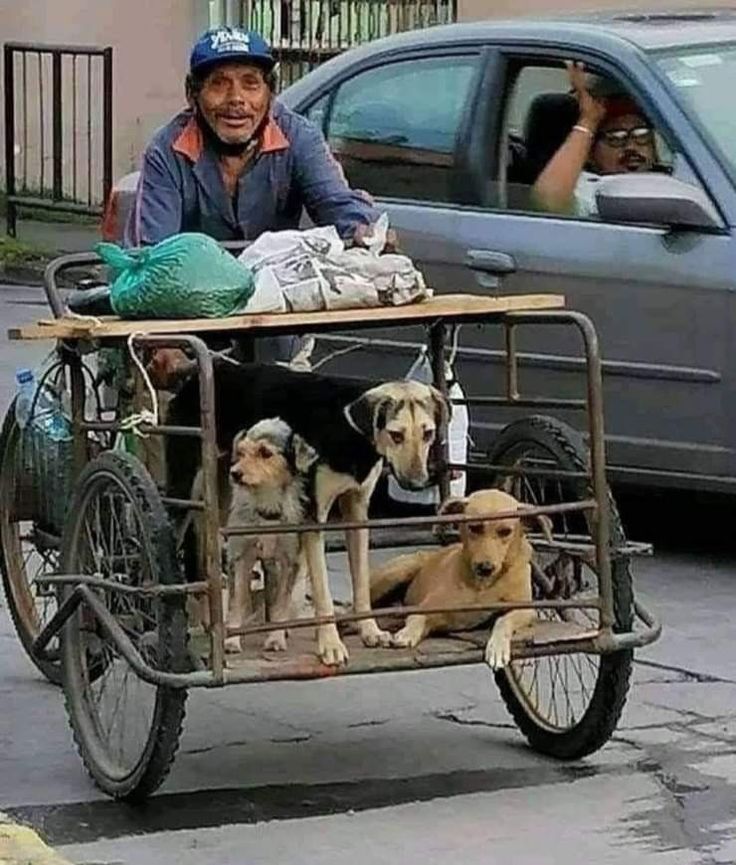
Later, I came across a short video of a large dog sharing its resting space with a much smaller and frightened dog.
It was not a dramatic rescue.
There was no grand act of heroism.
Yet something about it touched me.
The larger dog could have comfortably occupied the entire bed.
Instead, little by little, it adjusted itself to make space for another being.
Perhaps compassion begins there.
Not necessarily in extraordinary acts of sacrifice.
But in our willingness to loosen our grip on comfort, space, certainty, ownership, or self-interest so that another being can feel safe.
The more I observe people, relationships, organisations, and even myself, the more I feel that transformation may not begin with learning something new.
It may begin with an honest examination of what we are unwilling to let go of.
Over the years, I have come across countless frameworks, models, theories, and tools promising transformation.
Many of them are valuable.
Yet I often wonder if we have unintentionally made transformation appear far more complicated than it needs to be.
Perhaps the journey begins with simpler questions.
Why did I react that way?
What am I protecting?
What am I unwilling to let go of?
What is stopping me from acting on what I already know to be right?
I do not have answers to these questions.
This blog is not an attempt to provide them.
It is simply an attempt to sit with them.
To explore them honestly.
And perhaps, in the process, discover something about being human.
For now, I leave with the same question that started this reflection:
How much of our compassion is limited by a lack of feeling, and how much by our reluctance to let go of ourselves?


Leave a comment